Have you ever gone through your emails or social feed and felt overwhelmed by all the messages? Seeing many bold headlines, bright colors, and lots of ads all at once is tiring. This is exactly why so many marketers are turning to the marketing equivalent of a breath of fresh air: minimalism.
Minimalist marketing means being clean, clear, and purposeful about the communication process, concentrating on what is truly important for the message rather than bombarding the crowd with information. This is simple: less clutter means a stronger message. It helps brands appear more focused, more human, and more trustworthy in the eyes of consumers. Moreover, it is more than just a passing trend. Up to 10,000 marketing messages bombard the average person each day. Therefore, when there is a calm, clear message from a brand, it really stands out. Indeed, 64 percent of people are willing to pay more for a brand that offers simpler experiences. Additionally, more than 80 percent of marketers consider personalization, an important aspect of smart minimalism—as essential for the success of their campaigns.
However, there is a catch. Minimalism is simple for sure, but it’s easy to go wrong. There are some messages that are too vague. In an attempt to look minimal, some visuals become cluttered. Sometimes, data and feedback are completely ignored. In this blog we are going to be talking about five mistakes that marketers make with minimalism and how you can fix it fast. We’ll discuss messaging, audience research, visuals, feedback, and long–term strategy.
1. Over-Simplifying Messaging to the Point of Ambiguity
Now that we see the reason minimalism picks up steam, let’s get into areas where things can go wrong. One of the most common mistakes that marketers have made is oversimplifying their message to such an extent that it becomes meaningless. In its essence, people tend to think that minimalism entails fewer words, cleaner visuals, but at times it winds up confusing the audience instead of intriguing them.
Minimalism is not about saying less, just for the sake of it. It is about being precise and straight to the point. The issue is that when you remove the essential details in the pursuit of sleekness, it all falls apart. It may have a nice polished look, but it doesn’t always tell the whole story. And if the message isn’t clear, people don’t know what to do next and why they should care. This is often the case when teams mistake less for better. The real goal is all about having focused content. Even though it may seem minimal, trimming down your product description into a few vague words can also make the offering sound confusing or forgettable. That results in lower engagement and the loss of trust.
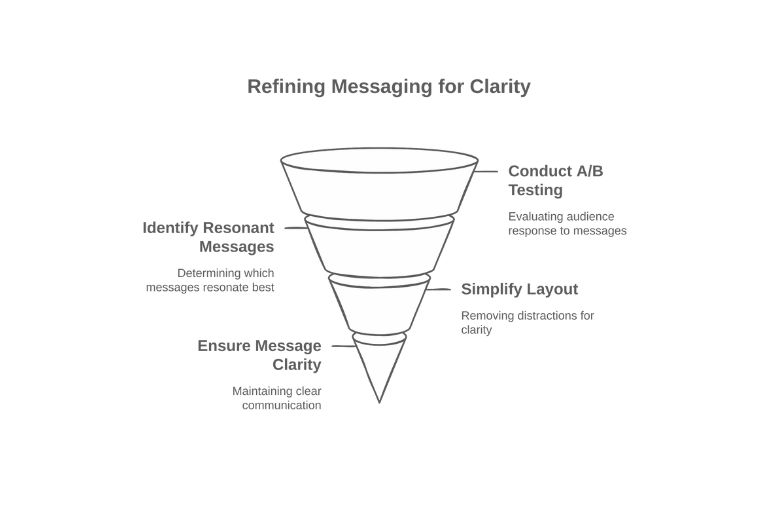
But the good news is that this is something that can easily be fixed. A/B testing is a good way of balancing simplicity with clarity. You can test different versions of your message to see what really resonates with your audience. It helps to keep your message clear without overwhelming people. This is backed up with research too. According to Social Marketing Quarterly, one of the main reasons why campaigns fail is because they have unclear messaging. At the same time, landing pages that removed distractions, such as navigation menus, boosted conversion rates by over 300 percent. Cleaner layouts do work well with people, as long as the message still comes through.
Remember the Arch Deluxe campaign at McDonald’s? It was intended for adults who wanted a more premium burger, but indeed the messaging did not communicate the value. After all that advertising, people were still unclear about what made it unique. This is truly a case of oversimplification working against a brand.
2. Neglecting Audience Research and Personalization
Earlier we saw that clarity is the main aspect of minimalism. However, even the most clear message can fail if it is not aimed at the right crowd. This leads us to another common minimalist marketing misstep. Marketers often forget to tailor their message in their pursuit of simplicity, and that’s where things begin to fall apart.
Minimalism is not about making a message that everyone can relate to. One thing that connects with one group may not mean anything to another. However, many campaigns treat their audience as one uniform crowd. This results in messaging that is clean but distant or a bit vague.
Marketers often confuse simplicity with cutting corners and this happens quite often. However, a message still needs to be personal even if it is simple. Minimalist campaigns that are short and tidy aren’t the strongest; they are meaningful. Understanding who you’re speaking to is what gives it meaning.
Only through research can we understand that. Even the most beautiful campaign is destined to fall flat without it. According to a HubSpot survey, less than half of marketers actually know their audience’s interest or shopping habits. And even fewer know where their audience hangs out online or what causes they care about. Sleek messaging doesn’t matter if it’s not in line with who your audience is.
There is a huge gap between what marketers think they are delivering and what consumers actually experience. As per Emplifi research, most marketers believe they’re sharing the right content, but consumers disagree. Half of them say that the content they receive is not relevant to them. That disconnect can quietly harm trust and interest.
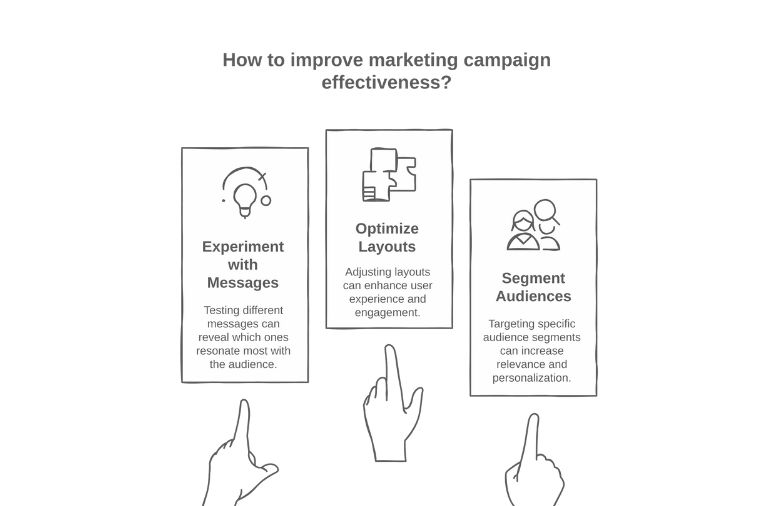
Marketers need to go beyond assumptions in order to fix this. Here, Conversion Rate Optimization tools (CRO) can be really helpful. They let marketers experiment with different messages, layouts and audience segments to find out which ones really hit the mark. And these tools don’t just present numbers; they present insight into what your audience actually responds to. With that clarity it’s possible to create minimalist campaigns that feel personal and relevant. A message that hits you in a way that it was made just for you, leaves a mark.
A classic example of missing the mark is Coca-Cola’s “New Coke” rollout, in 1985. While the new version may have won in taste tests, it had failed to appreciate the emotional bond people had for the original. The backlash came, and within weeks the original formula was brought back. In short, it’s a reminder that even the greatest ideas will flop unless the audience is connected to it.
3. Overloading Visuals Despite Minimalist Intent
Now that we understand how imperative it is to customize minimalist messages to your audience, it is time to learn about another common issue, that is, overloading visuals even if you’re striving for simplicity. Many marketers desire their designs to be unique, but in the process of making it not look plain, they usually end up using more colors, images, or graphics than necessary. However, this can backfire by confusing the viewers with too much and making the design unclear rather than clear. If too many visual elements are added to a minimalist layout, the simplicity that was intended to draw attention gets lost. The design feels cluttered and noisy instead of feeling fresh and easy to understand. It can make the brand message diluted and also decrease the audience’s engagement with the campaign. Because, after all, the whole point of minimalism is to draw attention to what is most important, not to take away from it.
But why does this happen? Many marketers fear plainness and add more visuals to make the design more interesting. Research, however, proves that complex graphics or too many colors could even damage the user experience. Our attention span is shorter than ever, from twelve seconds to eight seconds. In that context, visuals need to be simple and purposeful in order to catch attention quickly.
The trick is to limit the colors that you use and keep the images simple so that they match your brand’s identity. Marketers can find out if their visuals help or hurt the message by conducting early design testing. According to studies, there’s a balance to be had: too much visual intensity will push people away, but just enough will keep them engaged and lead them to conversion.
4. Ignoring Data and Feedback in Minimalist Campaigns
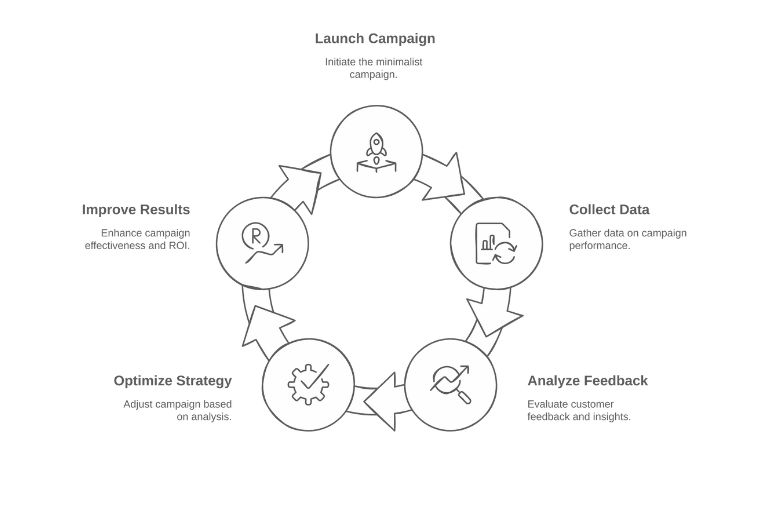
Now that we have looked at the importance of keeping visuals simple and purposeful, let’s look at another key mistake that marketers make in embracing minimalism. Often, campaigns are launched without looking at the data or customer feedback. Overconfidence in minimalism as a one size fits all fix leads marketers to miss out on important opportunities to enhance their strategies. If you ignore data, you depend on ideas, not proven facts. Without receiving any feedback or analyzing data, marketers have no idea if what they do is connecting with the audience or not. As a result, optimization is missed and the campaign’s results tend to be weaker. Minimalism works well because it’s clear, but this effect is only possible when the design matches what the audience is interested in.
To prevent this, marketers should analyze data and pay attention to what customers are saying. Using analytics to monitor campaigns and make changes on the spot helps minimalist tactics grow and improve. As discussed previously, using technologies powered by AI makes it simpler and quicker for marketers to find out what is successful and what needs to be changed.
This approach is supported by research. Almost every third marketer believes that using data helps them make the best strategy and boosts the return on their investment. A lot of businesses are spending more on digital marketing to focus on campaigns based on data. It highlights the importance of using both minimalism and effective information.
For example, the McLean Deluxe from McDonald’s was brought out too quickly without being tested and reviewed by customers. Because of the inconsistent experience, sales decreased, proving that ignoring opinions can ruin even the best plans.
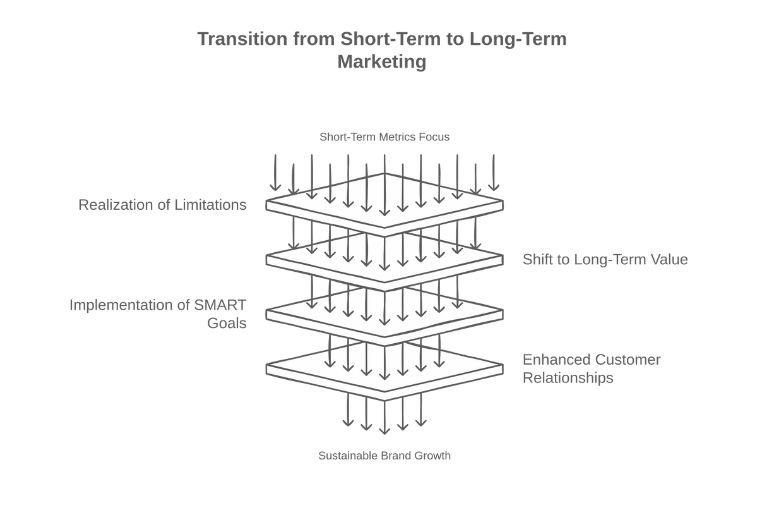
5. Focusing on Short-Term Metrics Over Long-Term Value
Since data and feedback play a big role in polishing minimalist campaigns, it’s also necessary to ask what goals marketers have for success. Sometimes, people are tempted to concentrate on clicks or impressions since they are easy to count and show fast outcomes. Still, giving more attention to vanity numbers may cause people to miss out on what truly sustains a brand in the long run. If companies only make campaigns to increase short-term numbers, they aren’t likely to create solid relationships with their customers. The urge to get fast results causes this, but it can in fact hinder the brand’s long-term progress. Therefore, it is more important for marketers to focus on lasting customer relationships by studying lifetime value, cost of acquiring new customers, and rates of customer retention.
For this issue, one must focus on setting reasonable and well-balanced goals. With SMART goals, marketers can monitor how well they do at first and also keep progressing over the long term. If a brand focuses on long-term benefits, its minimalist campaigns may help it form more meaningful relationships with its customers. Research conducted in the industry also confirms this. For instance, more than a third of CFOs worry that using vanity metrics can lead to a false assessment of marketing results. Studies indicate that using loyalty programs and making outreach more personal helps retain customers by about 15 percent. That shows that keeping people interested is more valuable than getting short-lived clicks.
Conclusion:
The process of adopting minimalism in marketing often uncovers five typical errors that can stop campaigns from succeeding. Such mistakes involve making messages too straightforward, not paying attention to researching and personalizing, piling on visuals in spite of wanting plain designs, ignoring useful feedback, and putting more importance on fast results than on lasting benefits. All of these mistakes can reduce the impact of a campaign and lower its chances of succeeding.
When minimalism works alongside strong data, clear messaging, and caring about customers, it can strongly boost a brand’s reputation and profits. Marketers are advised to go over their minimalist campaign plans, rely on analytics, and check their designs before using them to prevent these typical mistakes. When marketing is simple, insightful, and clear about its strategy, minimalism can boost its effectiveness.
Vidhatanand is the Founder and CTO of Fragmatic, a web personalization platform for B2B businesses. He specializes in advancing AI-driven personalization and is passionate about creating technologies that help businesses deliver meaningful digital experiences.